

Overview: Open Monument Day
Heritage Day on September 12, 2026
Click here for an overview of events in Jena in 2026.
Once a year, always on the second Sunday in September, very special places offer very special insights. Heritage Open Day provides the opportunity to embark on a journey of discovery, to immerse yourself in history and stories, and to hear, see, and experience new things or revisit the old in a fresh way. Open Monument Day is, in a sense, monument education—cultural enrichment—in a compact yet lighthearted and informal format. The idea behind it: to give our cultural heritage a voice, to inspire those interested, and to foster understanding.
This is more necessary than ever. For while our cultural monuments generate enthusiasm almost everywhere on Heritage Day, heritage protection and preservation often find themselves caught in the crossfire of conflicting interests in everyday life.
Sometimes, conflicts are fabricated that do not actually exist, such as between climate protection/climate change adaptation and historic preservation. Historic preservation means promoting sustainable urban development; it means protecting resources; it means climate protection. Historic preservation is grappling intensely with the effects of rapid climate change. However, historic preservation also helps develop solutions for adapting to the consequences of climate change—often through the (re)discovery of information stored in our historic heritage regarding technologies, working methods, building materials, and the use of plants… So there are no fundamentally conflicting interests here. It’s simply a matter of “how.” Unfortunately, it has become more difficult to openly discuss potential solutions and to set aside enough time for them and for the necessary preliminary research. Yet in the end, this is precisely what saves stress and, in most cases, money as well. Many of the open historic sites demonstrate this, and it provides an opportunity to engage in dialogue with owners and planners.
Sometimes, however, there are truly conflicting interests: on the one hand, the supposedly unprofitable public interest in “cultural heritage preservation”—and on the other, the private/individual profit-seeking interests of investors. Yet the preservation of existing structures and historic preservation makes perfect sense for economic and ecological reasons as well, since it tangibly protects material assets. Above all, however, preserving existing structures allows intangible cultural values to be safeguarded and further developed. Recognizing and communicating these values is an important task for society as a whole. Our cultural heritage is more sustainable than purely financial values, and it belongs to everyone. It embodies
“history and the creative power of generations. Historic monuments are condensed life, the result of human curiosity and accumulated knowledge. An immeasurable treasure trove of knowledge that has been built up over centuries. […]”
And our cultural heritage is a central building block of our democratic society. For cultural heritage is not, after all, a “dominant culture.”
“It does not restrict; it invites. Everyone can benefit from it. Cultural heritage does not set boundaries, but rather stimulates debate—about how cohesion arises from the energy of diversity. A shared culture. As a place of encounter, every monument serves, not least, as a counterpoint to a society that is becoming increasingly individualized, one that threatens to fragment and lose itself in virtual worlds. We humans are social beings. We need public spaces where we can come together, regardless of whether someone is new here or has lived here for ages. Places where we can get involved together—for the neighborhood, the city, the village. Monuments are part of that. The church that has been boldly repurposed. The renovated library. The historic community hall.”
Cultural heritage has immeasurable added value.
“NetzWERKE: Monuments and Infrastructure”—Heritage Day 2026
Heritage Weekend in Jena
Yes, you read that right—this year there’s an entire Heritage Weekend, and after a 10-year hiatus, there will finally be a small opening event again on the day before, Saturday.
We were inspired by this year’s theme: “NetzWerke.” In Jena, too, associations, initiatives, property owners, architects, craftspeople, restorers, foundations, and professional historic preservationists working for government agencies form a network without which our cultural heritage could not be preserved. Far too rarely do we realize just how extensive and, at the same time, how tightly knit this network is. Far too rarely, therefore, do we also consider its potential and its impact. We at the Jena Local Historic Preservation Authority are therefore grateful to the German Foundation for Monument Protection (DSD) for this renewed nudge through the selection of the motto. We thank the people in this network—which, by the way, also includes a municipal local board of the Foundation for the Preservation of Historical Monuments—for their motivation and support of every kind.
Jena—a city of universities and industry, a former royal residence, and above all a city on the Saale—can contribute a very rich and diverse treasure trove of cultural monuments to the theme “NetzWerke: Monuments & Infrastructure.” A colorful program has been created through wonderful collaboration with monument owners, associations, municipal agencies, cultural institutions, churches, Jena’s public transit system, and the university. Over 30 cultural monuments—spread throughout the entire city of Jena—will welcome interested visitors on Sunday, September 13, and in some cases as early as Saturday, September 12. We would like to extend our heartfelt thanks to everyone involved.
Printed programs will be available starting in early September at the Tourist Information Office and the City Museum. Of course, despite our best efforts, last-minute changes and cancellations may still occur. Information regarding such changes will be provided in the press and online.
Program in Jena - Brief Overview
Saturday, September 12, 2026
An Electrifying Day—A Look Back at 125 Years of Electric Power Supply
At the end of 1898, the Jena City Council made a groundbreaking decision. It advocated for the construction of a power plant and the operation of an electric streetcar. As early as January 14, 1899, the “Agreement on the Construction of an Electric Power Plant and an Electric Streetcar System” was signed between the municipal authorities and the Berliner Bank in Berlin. Combining the power plant and the streetcar system under a single company was both practical and logical. This functional and business-oriented integration also resulted in a unified architectural complex. Construction of the power plant and the first carhouse on the property on Dornburger Straße began in 1900. Both the first carhouse of the streetcar depot and the power plant buildings were constructed of brick in a neo-Gothic style with stepped gables.
In 1901—125 years ago—electricity finally flowed for the first time. The machine house at Nollendorfer Str. 30 is part of the first construction phase and, thanks to the preserved wall-mounted fixtures and, above all, technical equipment from the time of its construction, serves as an authentic testament to Jena’s industrialization. The hall remained in use until the 1990s and has been preserved and revitalized since 2014 by the cultural association In’s Netz e. V. (how fitting) under the name TRAFO. On Saturday, visitors are invited to guided tours with eyewitnesses and a discussion about the future of industrial heritage sites like the TRAFO.
125 years of electricity in Jena also mean 125 years of streetcars. On April 1, 1901, the first streetcar traveled from the car depot on Dornburger Straße to the former Schubertsburg restaurant on Kahlaische Straße. Following this state police inspection of the power plant, power lines, and tram system, regular tram service began on April 6 on the so-called “Centrale” route. The city’s rapid growth quickly led to an expansion of the route network and, accordingly, required the expansion of depot and workshop facilities. In 1930, the so-called new (second) car depot, designed by Heinrich Fricke, was built west of the first car depot on a trapezoidal floor plan resulting from the course of Unterer Philosophenweg (Th.-Mann-Straße). The three-aisled hall, constructed of reinforced concrete with a multi-curved shell roof using the Zeiss-DYWIDAG system, represented a highly acclaimed feat of civil engineering and was duly recognized in contemporary technical literature. In 1948, the streetcar depot was expanded to include a northern hall. The tram depot is protected as a cultural monument, serving as a tangible testament to Jena’s city history, the history of transportation—and thus urban development—as well as industrial architecture. Unfortunately, Jena’s public transit system had to part ways with its historic depot. Therefore, it is not open to the public on Heritage Day.
However, the historic streetcars running on Saturday—mobile monuments on modern tracks—are accessible. Between 1:00 p.m. and 8:30 p.m., the historic railcars 26 and 101, along with trailers 155 and 207, will operate on a regular schedule between Nordschule and Winzerla via the city center. You can find the schedule in the downloads section.
In 1926, 25 years after electricity was first generated in Jena, the 50 kV hall of the Jena Nord substation—designed by Weimar architect Bruno Röhr—was connected to the grid after just 7 months of construction. Connected to the Burgau switching station (ZEISS), this enabled the establishment of a stable 10 kV grid in Jena. In the 1930s, the substation developed into a hub for the regional power supply. In 1942, it was expanded with the construction of a 110 kV hall and eventually converted to a 110 kV feed-in. It has been listed as a cultural monument since 1993 and has served as the home of Imaginata since 1997. Could there be a better place to kick off Heritage Day under the theme “NetzWERKE: Monuments & Infrastructure”? We don’t think so, and we therefore invite you to the opening event on Saturday, September 12, at 4:00 p.m., at Imaginata. The afternoon will feature musical accompaniment by Helga Assing (electric piano) and Klaus Wegener (saxophone). Following the opening event, the association invites you to a guided tour of the technical monument, including the new exhibition
Sunday, September 13, 2026
Downtown
Networks and infrastructure represent movement and social and cultural connections. A well-developed, functioning cultural and social infrastructure is not only just as important to a society as its technical or transportation infrastructure—it is an indispensable safety net for our coexistence. We are therefore delighted that the idea, which was tentatively conceived last fall, has become a reality, and that the birthday boy — the Jena Philharmonic Boys’ Choir— is inviting its guests to small pop-up concerts at and within Jena’s architectural and garden landmarks. Congratulations, dear Boys’ Choir, and thank you very much.
The event begins at 9:15 a.m. at the so-called “Faulloch.” JenaKultur has kindly agreed to open the city wall complex—from the Pulverturm to the Johannistor —as early as 9:00 a.m. this year. The choir’s other stops include:
Friedenskirche/Historic Johannis Cemetery, where exciting lectures and guided tours will be offered throughout the day, along with a supporting program featuring hands-on activities for families, live music, and coffee and cake.
the Griesbach Garden, the courtyard of the Collegium Jenense—which Dr. Paust is opening especially for this event, followed by a guided tour—and
Schiller’s Garden with the garden house on Schillergäßchen. Prof. Hühn, Dr. Schlotter, and their staff have once again put together an exciting program here for both adults and children.
The Jena Municipal Museums, most of which are housed in cultural monuments, will also open their doors for free tours on Heritage Day. In addition to the so-called “Romantikerhaus,” which is currently undergoing renovation, the Göhre/n am Markt will also be open. Guided tours will be offered for groups of 5 or more people as needed. There are also scheduled guided tours at the Carmelite Monastery and the Pelzer Workshop. Villa Rosenthal, used by JenaKultur and featuring a wonderful garden, is also open to the public on Sunday.
Speaking of JenaKultur: Heritage Open House is heritage education in a nutshell. Heritage education, in turn, is an important component of historical, political, and cultural education. The Volkshaus was built precisely for this purpose. The Jena Philharmonic is also dedicated to cultural education and outreach. In this respect, what belongs together is now coming together in a time-honored tradition: the Jena Philharmonic’s season-opening concert, the Volkshaus open house, and Open Monument Day.
The Volkshaus is located on Carl-Zeiss-Platz. From an urban planning perspective, this square was once a highlight of Jena and remains to this day a focal point of the Zeiss-Abbe legacy. At its center stands the monumental memorial pavilion dedicated to Ernst Abbe, which opens its bronze and glass doors at 10:00 a.m. North of Zeiss-Platz and west of Zeiss-Straße lies the so-called Bachstraße area. The former state hospitals form a complex that has evolved over more than 200 years. Since last year’s guided tour of the complex was somewhat disorganized due to “overcrowding,” this year’s event will begin with an introductory lecture in the lecture hall of the Eye Clinic, followed by a guided tour of the complex. Visitors can explore the Women’s Clinic bunker and the Eye Clinic, but unfortunately the Pathology Department is no longer accessible.
The Glass House in Paradies invites visitors on Saturday and Sunday not only to linger and listen to music but also offers interesting panel discussions.
Beyond the city gates into Jena’s surroundings, rural neighborhoods, and historic town centers
Up on the Forst, three monuments can be visited: In addition to the small Forst Observatory, which is maintained by the association “Volkssternwarte Urania Jena e. V.,” the Forst Tower and the Bismarck Tower are also open to visitors. The heavily damaged Bismarck Tower has been undergoing renovation by the municipal agency KIJ since this spring. The first phase of construction is funded by the Thuringian State Office for the Preservation of Historical Monuments. For Heritage Day, Ms. Kohl from KIJ, the supervising architect Mr. Pfeil, and the Forsthaus Mountaineering Club invite you to learn about the ongoing work and the planned next steps. Please note: These are construction site tours. The ascent to the scaffolding level will take place in small groups of 10 to 15 people. Sturdy, closed-toe footwear must be worn. Children must be at least 8 years old (minimum height 1.20 m) and may only access the scaffolding when accompanied by a parent or guardian.
Visible from afar and itself an outstanding vantage point, the ruins of Lobdeburg Castle dominate the central Saale Valley. Following nearly 30 years of comprehensive restoration—carried out in accordance with historic preservation standards—of the above-ground structures that had been preserved and uncovered through archaeological investigations, the castle is now once again open to the public. In his 2020 dissertation, Jena’s city archaeologist, Dr. Rupp, evaluated and compiled the archaeological excavations and architectural-historical studies conducted in connection with this work—some of which he carried out himself. On Sunday morning, he invites visitors to join a guided tour of the castle complex.
The churches in the former villages and historic town centers are among the special treasures of the cultural landscape. In the 15th century, a prominent stonemason left a particularly rich legacy in Jena and the surrounding area: Peter Heierliß (Harlaß). In addition to the double-sided information panel at the Johannis Cemetery and St. Michael’s City Church, his stonemason’s mark can also be found at the Church of Our Lady in Wenigenjena (Schiller Church) and St. Mary’s Church in Ziegenhain. Both churches are open. The Gothic choir of St. Peter’s Church, which today defines the skyline of Lobeda, was built between 1477 and 1483 as part of the church’s reconstruction. The interior features valuable, large-scale late-Gothic wall and ceiling paintings. Extensive construction work is planned for the church itself, as well as in the churchyard. For example, the roof structure and roofing over the choir are scheduled to be renovated in 2027. To finance these important projects, benefit concerts, among other events, are being held at St. Peter’s Church. To conclude Heritage Day, the band Stilbruch will perform. From Lobeda, it’s just a stone’s throw to Drackendorf. The local church,“Auferstehung Christi,”also invites visitors to enjoy its cool interior throughout the day. The church is located on the edge of Drackendorf Park. By 2021, in coordination with nature conservation efforts, the original design concept of the landscape park had been largely restored. The Drackendorf Heritage Association invites visitors to a fair at the tea house on Sunday.
If you cross the Saale River—for example, via the historic Burgau Bridge—you’ll reach Burgau. At the other end of Geraer Straße—which begins here and is lined with courtyards—stands the Trinity Church. After several years of preparatory work, the extensive restoration of the 1796 Poppe organ finally began in 2026. On Heritage Day, which also marks German Organ Day, various organ concerts will be held as part of the Burgau Organ Festival. Concert 19 is dedicated to the memory of Ute Merbach, the founding benefactor of the Jena Church Foundation, who passed away this year.
The picturesque town of Leutra lies in the very south of Jena. A stroll through the town is always worthwhile. On Sunday, you can also visit the fortified church of St. Nicholas, built in the 12th century, and listen to the knowledgeable commentary provided by Ms. Junghans from the parish. On the way to Leutra, you’ll also pass the Old Göschwitz Highway Bridge. Its construction was not only an infrastructural undertaking but also a political and ideological one. The exhibition in (sic!) the bridge is open from 10:00 a.m. to 2:00 p.m.
There’s also plenty to discover in the north of Jena: for example, the Marienkirche in Zwätzen—whose renovation is also supported by the German Foundation for Monument Protection—will open its doors. Members of the now-dissolved—but somehow still active—Zwätzen Cultural Landscape Association have collaborated with Dr. Pester to prepare an exhibition on the Teutonic Order in Zwätzen, which will also be on display in the church. From Zwätzen, you can easily reach the beautiful village of Laasan via the Kunitzer Hausbrücke. Here, the local association is opening the Rats- und Brauhaus and offering light refreshments. Right across the street, you can also visit the open studio of the “Regina Foundation.”
And what else?
We’d love to see photos from the day—including those taken through the eyes of children or teens. We’re grateful for any tips or additional information about our historic sites. Just send them to denkmalamt@jena.de
Photo Gallery
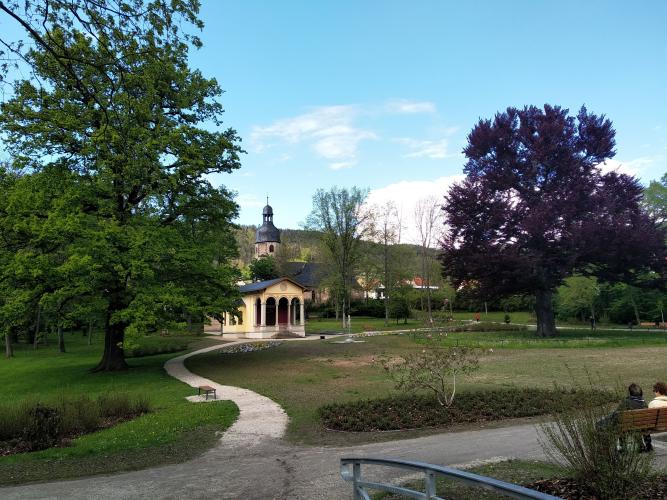
Drackendorfer Park
© Elke Zimmermann
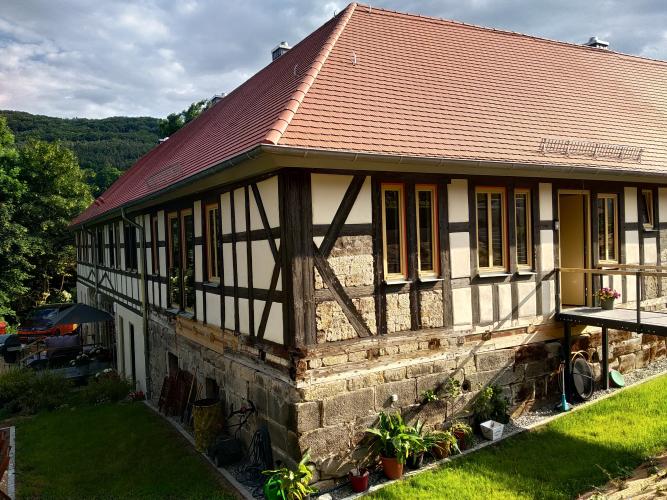
Mühle Leutra
© Elke Zimmermann
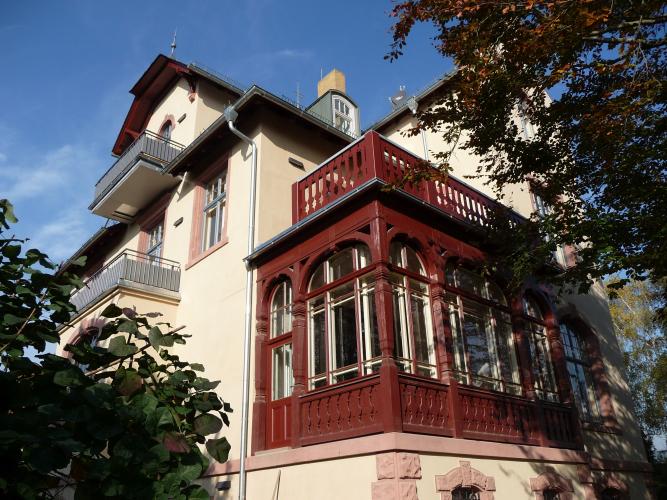
Villa Rosenthal
© JenaKultur
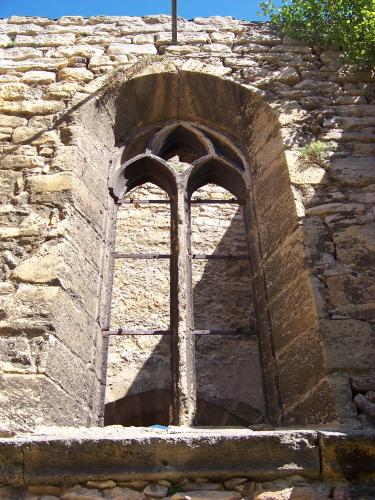
Kirche St. Marien Ziegenhain
© E.Zimmermann
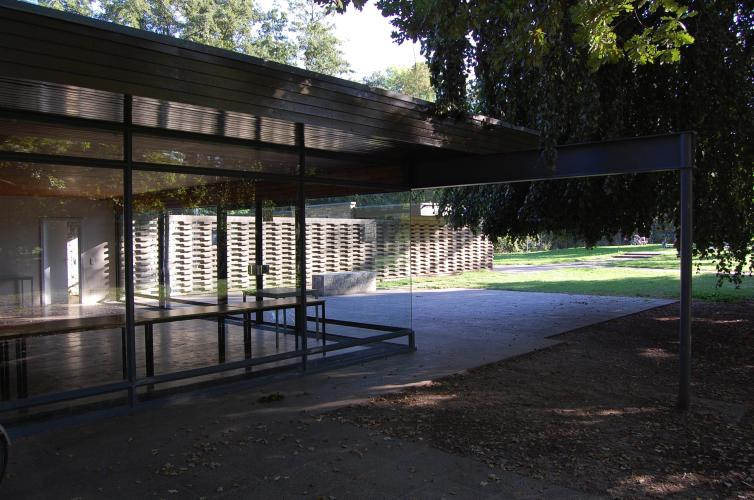
Glashaus
© E.Zimmermann
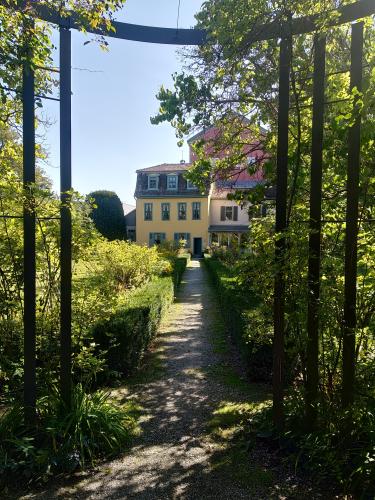
Schillers Gartenhaus
© Elke Zimmermann
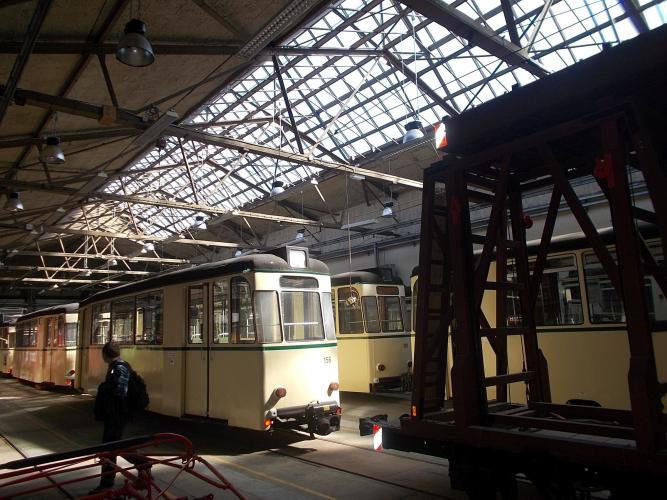
Straßenbahndepot
© Elke Zimmermann


